
Between Wind and Silence -
Across the Borderlands of the Nomads
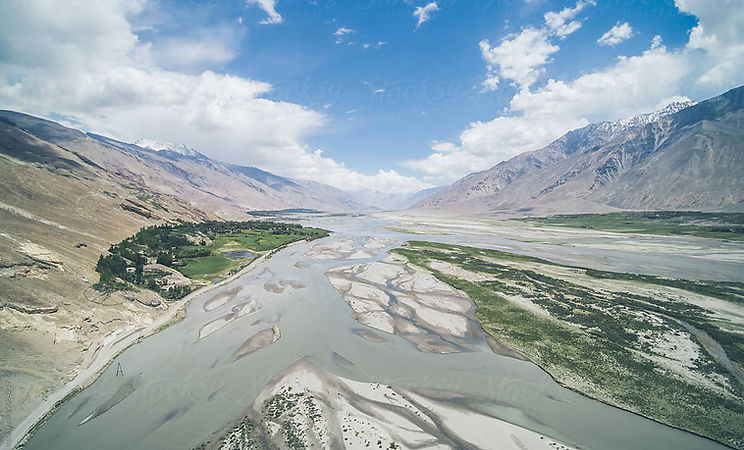
The morning is blue with cold. A timid sun tries to get a grip on the steppe grass. In the distance, smoke curls from a felt yurt, like a whisper of life in a land without walls. We are somewhere in the eastern part of the Pamirs, on the border between Afghanistan and Tajikistan. A no man's land, literally and figuratively. No official border posts, no asphalt, only the breath of the wind and the shadow of ancient paths that meander from yurt to yurt, from mountain to valley. Here still live the last true nomads of Central Asia - Kyrgyz, often with Afghan or Tajik roots, who capture their heritage not in a passport but in stories, saddle blankets, and memories.
Caravan Tracks through the Roof of the WorldI do not travel here for a destination, but for a rhythm of life. There is no agenda, only a route that weaves like a fluid thread through landscapes and histories. The Wakhan corridor, that narrow strip of Afghanistan that twists between Tajikistan and Pakistan like a forgotten finger, is such a place where borders are arbitrary and at the same time vital. For the Soviets and the Brits, this was a strategic buffer zone; for the nomads, it is nothing less than their cosmos.In the distance, a narrow strip of water glimmers: the Panj River. Across lies Afghanistan, which may seem mysterious to us, travelers with papers and time, but for the herders on this side of the river, it is just the other side of their pasture. Families have been torn apart; herds drift across invisible boundaries that no goat cares about. Here, nomadism is not romance, but necessity.
The rhythm of the tentMy guide, a Tajik of Kyrgyz descent, is named Temur. He grew up in a yurt, knows how to store yak butter in goat stomachs, and can tell the difference in smoke between camel dung and poplar wood. "Every smoke has a voice," he says as he lights the stove in a small ger, somewhere at 4000 meters altitude. Outside, the wind howls. Inside, it is warm from tea, milk, and yak hair.The ger - round, sturdy, movable - is more than a home. It is the heart of the nomadic world, a symbol of cyclical life and connection to the land. Temur's grandmother hangs a prayer cloth next to the doorway, her hands betraying years of weaving, milking, cooking, praying. She offers me dried yogurt balls: sour, hard as stone, but comforting like a greeting.

The border as a lifeline The Karakoram, the Pamirs, and the Tien Shan form a chain of barriers that have also been passages over the centuries. Trade routes like the Silk Road and the Tea Road ran straight through these mountains. But it was the nomads who inhabited them. Where caravans rested, there had often been a summer pasture or winter camp of a tribe for centuries. I reach the village of Murghab, a forgotten corner with Soviet blocks, Chinese motels, and Kyrgyz yurts. Here, at the crossroads of ancient empires, an echo of the past can still be heard: the market is set up by women with headscarves and gold teeth, who sell saddle decorations and self-dried apricots alongside plastic toys. A man with a faded cap points to the road leading to China. 'Three hundred kilometers that way. But without a visa? Forget it.' The borders have become modern, bureaucratic. But the landscape cannot be tamed. Wind, snow, mountain passes - they take no notice of international treaties.
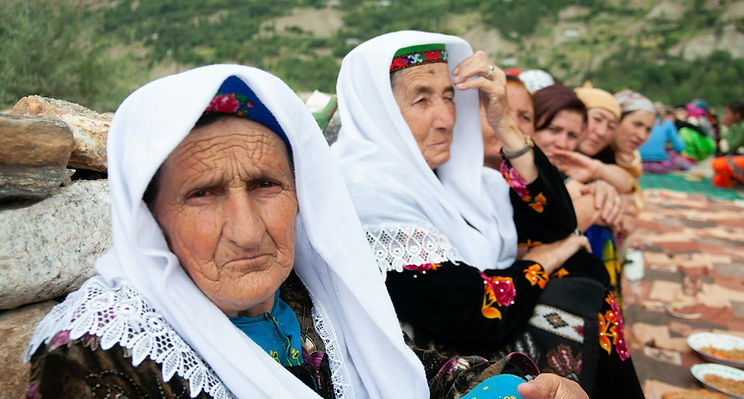
Nomadism in transitionYet everything is changing. Many nomads have become sedentary, partly out of necessity. Climate change, nationalist state formation, and economic dependence on cities force them to set up their tents permanently. Children go to school in concrete villages, and the old herders follow the news via solar panels and WhatsApp.Yet something remains. In the highlands of Kyrgyzstan, near the Chinese border at Kashgar, I see another yurt camp. Here live seasonal nomads: families who move with their herds to the jailoo in summer. The children help with milking, women make kurut (yogurt balls), and men build fences with stones. The air is thin, the horizon wide, and as the sun sets, a throat song sounds that weaves like a thread through time and space.

Old routes, new storiesI remember a story that an old shepherd told me, sitting at the edge of his yurt: how his grandfather once traveled to Kashgar, with carpets, tea, and salt. 'Ten days over the passes. At night you sleep with the horses, during the day you sing to the wolves.' He laughed, his eyes almost closed by the wrinkles. 'Now? You call your brother in Kashgar with your mobile phone. And you buy your tea at the supermarket.'But the pride remained in his voice. Because nomadism has not disappeared. It lives on in the memory of the landscape, in the stories, in the collective rhythm of people who have learned to live with the wind. The borderlands that once marked separations turn out to be the spaces where nomadic thinking — fluid, resilient, multiple — best persists.
Follow the silence yourself
There are places you don't visit as a tourist, but as a temporary participant in a rhythm that is older than borders. The border areas of Central Asia, where nomadic life still breathes, are such places. You don't travel to tick something off, but to leave something open - space, wonder, connection.Do you want to experience it yourself? Spend the night in a yurt under a starry sky that is nowhere brighter. Ride over high plateaus where yaks graze and children laugh while riding on donkeys. Drink tea with shepherd families who share their stories without haste. These are journeys that slow you down, enrich you, and fill you with wonder. Come along, to the edge of the map - and discover what it is like to come home in motion.